Tips & Guides
How to Deadlift With Proper Form: A Step-by-Step Guide
How do you deadlift safely?
You deadlift safely by mastering the hip hinge, bracing your core hard, and keeping the bar close to your body as you stand it up with a neutral spine. The deadlift looks intimidating, but it's simply the skill of picking something heavy off the floor the right way, something you'll do for the rest of your life. Here's how we coach it at FitCultInc, step by step.
1. Set your stance. Stand with feet about hip-width apart, bar over your mid-foot. The bar should be close to your shins, not out in front of you.
2. Take your grip. Hinge at the hips and bend the knees just enough to reach the bar. Grip it just outside your legs. Your shoulders will sit slightly in front of the bar.
3. Set your back and brace. Lift your chest, flatten your back into a neutral, strong position, and take a big breath into your belly. Brace your core like you're about to be nudged in the stomach. Pull the slack out of the bar so it's tight against the plates.
4. Drive. Push the floor away with your legs and stand up, keeping the bar dragging close to your shins and thighs the whole way. Hips and shoulders should rise together, not hips first.
5. Lock out. Finish standing tall with hips fully extended, glutes squeezed, ribs down. Don't lean back or hyperextend. Then hinge back, let the bar travel down close to your body, and reset for the next rep.
Every rep starts from a fresh, braced setup. Bouncing reps off the floor with a loose back is where people get into trouble.
Is deadlifting bad for your back?
No, deadlifting is not bad for your back when it's done with good technique; in fact, it's one of the best ways to build a stronger, more resilient back and posterior chain. The exercise has a reputation it doesn't deserve, earned mostly by people lifting too heavy, too soon, with a rounded spine.
The deadlift trains exactly the muscles that protect your spine in daily life: your glutes, hamstrings, lats and the deep core. Loading them progressively and correctly makes everyday lifting, from moving boxes to carrying kids, safer, not riskier.
The risk comes from two things: a spine that rounds and loses its braced, neutral position under load, and ego loading that outpaces your technique. Keep the back neutral, keep the bar close, and add weight gradually, and the deadlift becomes a long-term asset. As always, sharp or persistent pain means stop and get assessed by a qualified professional.
How much should a beginner deadlift?
A beginner should deadlift a weight they can move with clean technique for the prescribed reps, not a number borrowed from someone else's program. There is no universal figure, because starting strength depends on your size, training history, age and how the movement feels for you.
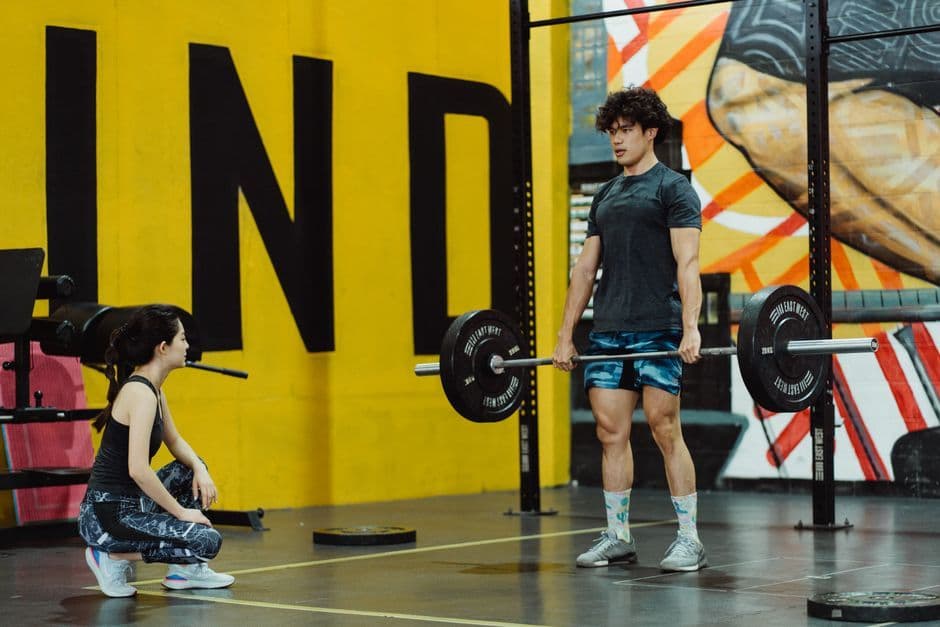
 Man preparing for a weightlifting session with barbell and weights in a modern gym.
The smarter approach is to start light enough that form is perfect, then add small increments over time. A practical progression looks like this:
- Nail the pattern first. Often with a lighter barbell, dumbbells, or the bar raised on blocks to reduce range while you learn.
- Add weight in small jumps once you can complete all your reps with a flat back and a clean lockout.
- Leave reps in the tank. Especially early on, stopping a couple of reps before failure keeps your technique sharp and your back safe.
Progress in the deadlift comes from consistency, not heroics. Chasing a big number before the pattern is grooved is the fastest way to a stall or a strain. Build the technique, and the strength follows on its own.
Conventional vs Romanian deadlift: what's the difference?
The main difference is that a conventional deadlift starts from the floor with more knee bend, while a Romanian deadlift (RDL) starts from standing and keeps the legs much straighter to bias the hamstrings and glutes. They're complementary, not competing, and most well-built programs use both.
Conventional deadlift:
- Begins with the bar on the floor.
- More knee bend, so the quads, glutes and back all contribute.
- A full-body strength builder and a true test of total pulling power.
Romanian deadlift:
- Begins standing, then you hinge the bar down to around mid-shin.
- Minimal knee bend and a deep stretch through the hamstrings.
- The bar stays close, the back stays neutral, and the hamstrings and glutes do the work.
If you're new, the RDL is often the best place to learn the hip hinge, because starting from the top makes the movement easier to feel and control. Once the hinge is second nature, the conventional pull from the floor falls into place. Which one you prioritise depends on your goals, your structure and what your body responds to, exactly the kind of call a coach helps you make.
Putting it together
The deadlift is too good a movement to avoid out of fear or to wreck with poor form. At FitCultInc in Wentworth Point we coach it from the ground up, matching the right variation to your body and building your strength at a pace your spine and joints can handle. Whether your goal is raw strength, a leaner stronger frame, or simply moving through life without niggles, the deadlift earns its place.
When the FitCult app launches later in 2026, your deadlift programming, progress tracking and technique check-ins will live in one place, with your coach a message away. Until then, book a free intro session with FitCultInc, or train with us online anywhere in Australia. Built, not born.
Call Harry on 0424 250 374, DM @fitcultinc, or visit fitcultinc.com.
Get an honest quote for your place
A free quote, no obligation, and the price we give is the price you pay.